

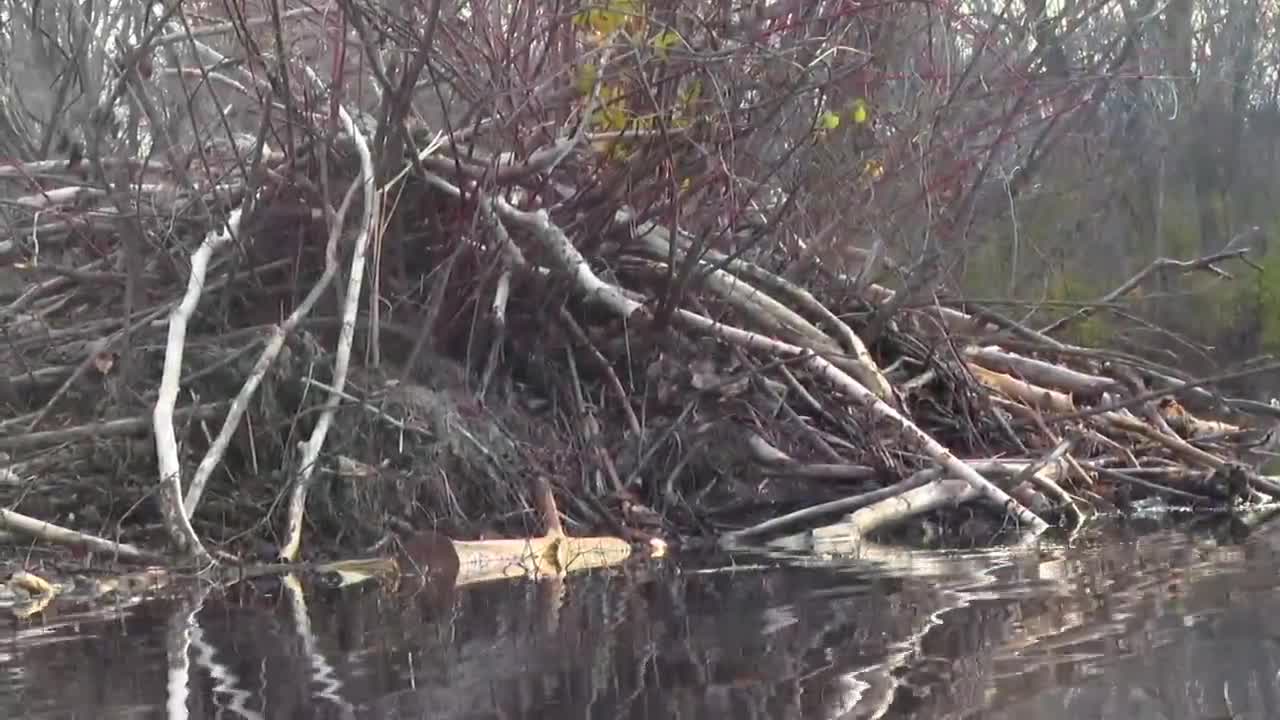


BROOKFIELD — Four beavers were trapped and killed at Brookfield's Fox Brook Park last week after Waukesha County Parks said efforts to manage them failed to address shoreline and habitat concerns.
Watch the video report below:
The decision has disappointed wildlife advocate Amy Mueller, who said the beavers had become a special sight for visitors.
"I think it's remarkable to see something like this here in a relatively developed part of Brookfield," Mueller said.
"I'd love for people to understand how important beavers are to the ecosystem and that there’s ways to deal with conflicts that don’t end in trapping."
The county said beavers had been cutting down trees and shrubs, contributing to erosion and affecting the shoreline.
In a statement to TMJ4 News, Waukesha County Director of Parks and Land Use Dale Shaver said staff spent more than a year clearing dams and culvert obstructions, addressing erosion, and replanting shoreline vegetation.
Those efforts did not provide a sustainable, long-term solution, he said.
TMJ4 found several trees that had been damaged by the beavers on Tuesday.
The county said it considered relocation and water-level control, but determined neither was appropriate for conditions at the park. Shaver cited limited suitable habitat, existing beaver territories, regulatory requirements, and uncertainty about relocation's long-term success.
As a last resort, the county worked with the U.S. Department of Agriculture's Animal and Plant Health Inspection Service to remove the beavers using body-grip traps designed to dispatch them quickly.
The effort concluded last week, with four beavers killed.
"My initial reaction was disappoint," Mueller said.
"Why now? Could they have paused and came up with a plan to relocate in spring?" she asked.
Mueller questioned why lethal removal was chosen, saying she believes there are other ways to protect the park.
"If you're worried about trees, you can wrap them in chicken wire or coat them in paint with sand in it," she said.
Beavers can play an important role in ecosystems. Their dams create wetlands that support a variety of wildlife and increase biodiversity, according to the Beaver Institute.
Mueller pointed to the Beaver Institute's website for more information about beavers and ways to address conflicts with beavers.
Shaver said the county appreciates residents and wildlife advocates who have raised concerns.
He said officials will continue consulting experts and evaluating wildlife management decisions case by case, balancing conservation, natural resources, public access and taxpayer dollars.
Full statement from Waukesha County Director of Parks and Land Use Dale Shaver:
"Thank you for reaching out regarding the beavers at Fox Brook Park. We understand the concerns surrounding their removal and want to emphasize these decisions are never made lightly.
Our staff has been working to manage beaver activity at Fox Brook Park for more than a year. As a nature-based park system responsible for managing more than 8,500 acres, we deeply value wildlife and the important role it plays in healthy ecosystems. We don’t remove beavers simply because they’re present in our parks or natural areas.
The shoreline has very limited space between the water and the adjacent paved trail, making the trees especially important to protecting the lake shoreline and preventing erosion or burrowing from undermining the trail. With extensive experience managing beaver activity throughout our park and highway systems, we understand the challenges and costs associated with this damage. Beyond these infrastructure concerns, we must also consider the long-term ecological health of the shoreline. Continued harvesting of preferred trees and shrubs raises concerns about natural regeneration, shoreline stability, and habitat availability for other wildlife species that depend on this vegetation.
Over the past year, staff have invested considerable time and resources in managing these impacts, including clearing beaver dams and culvert obstructions, addressing erosion, and restoring shoreline vegetation through new plantings. Unfortunately, these efforts did not provide the sustainable, long-term solution we hoped for.
We consider many alternatives before making the decision to dispatch an animal, including relocation and water-level control. While these approaches have been used at other locations, they were not appropriate or effective given the conditions at Fox Brook Park. Relocation also presents additional challenges, including limited suitable habitat, existing beaver territories, regulatory requirements, and the uncertainty of long-term success.
Each situation is carefully evaluated, taking into account available management options, staff resources, and financial considerations. Ultimately, we reached a point where a different management approach was necessary. This decision wasn’t just about protecting park users and amenities, but also the broader health of the shoreline and the habitat other wildlife depend on.
As a last resort, staff worked with the USDA's Animal and Plant Health Inspection Service (APHIS) to conduct targeted beaver removal using body-grip traps designed to dispatch the animals quickly. This effort concluded last week, and four beavers were dispatched.
We appreciate the community members and wildlife advocates who’ve shared their concerns and engaged in conversations with our staff. We will continue working with subject matter experts and exploring responsible wildlife management practices to protect and preserve our parks and natural resources. Ultimately, there is no one-size-fits-all solution, and our responsibility is to balance wildlife conservation, the health of our natural resources, public access, and responsible stewardship of taxpayer dollars."
This story was reported on-air by Kaylee Staral and has been converted to this platform with the assistance of AI. Our editorial team verifies all reporting on all platforms for fairness and accuracy.
It’s about time to watch on your time. Stream local news and weather 24/7 by searching for “TMJ4” on your device.
Available for download on Roku, Apple TV, Amazon Fire TV, and more.
